Finger torture
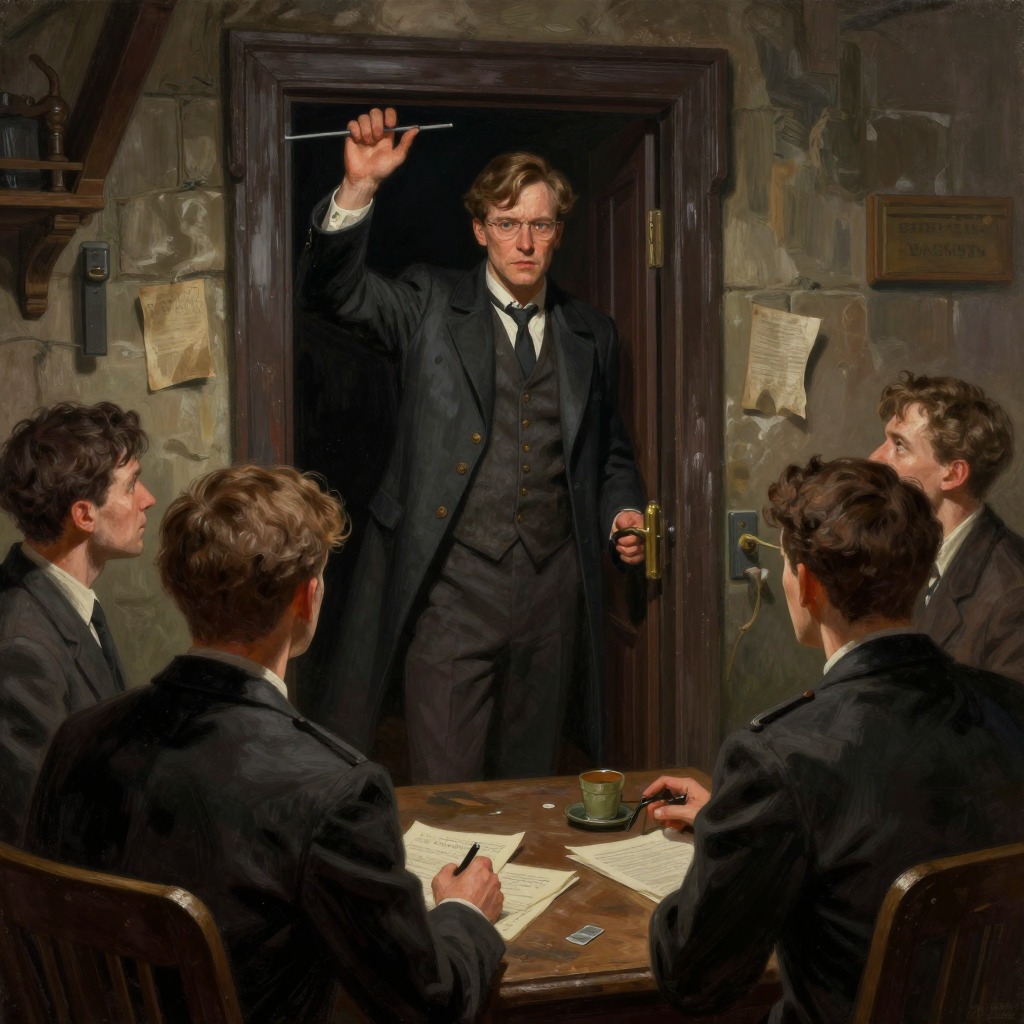
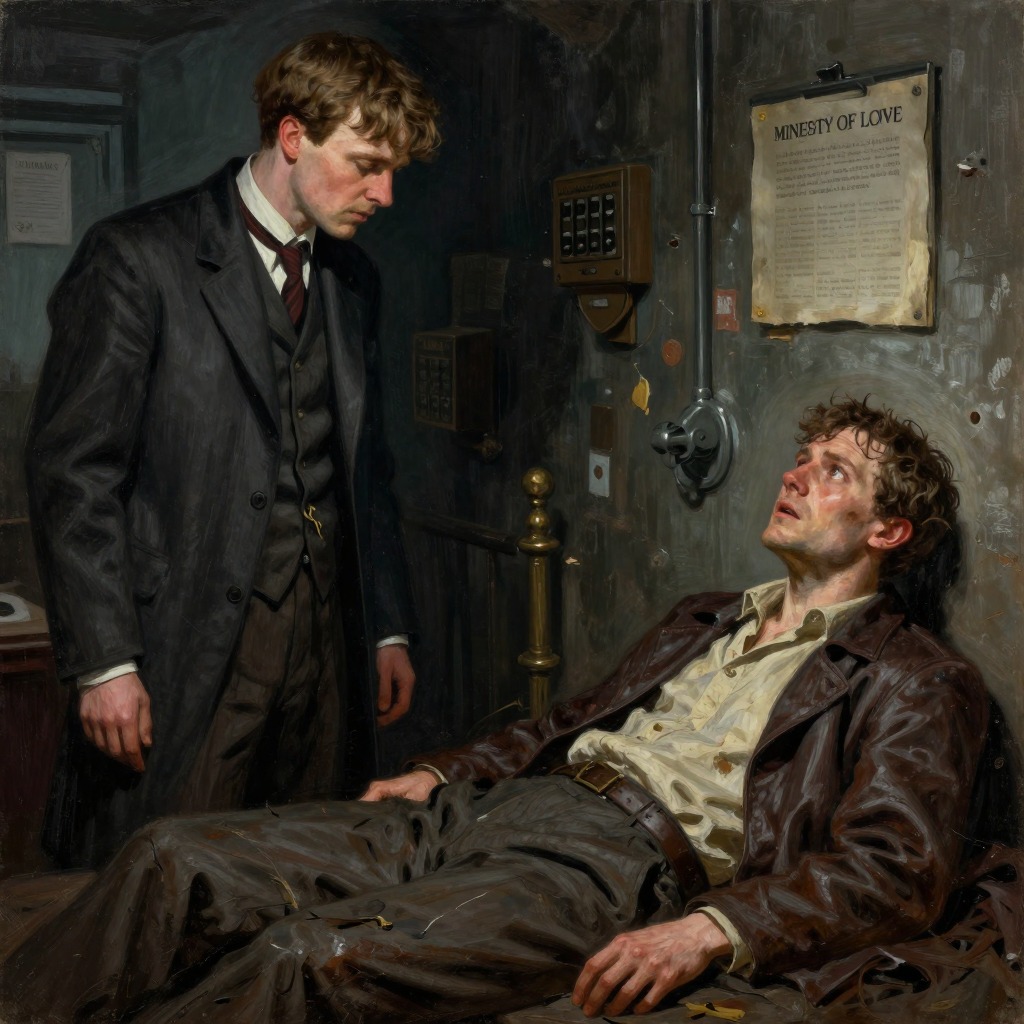
The finger torture is the pivotal interrogation scene of Nineteen Eighty-Four in which O’Brien, presiding over Winston Smith’s re-education inside the Ministry of Love, makes pain the arbiter of perception. With his left hand held up, its back towards Winston, the thumb hidden and four fingers extended, O’Brien asks how many fingers he is holding up; every answer of ‘Four’ is punished by a surge from the numbered dial at his side, until Winston, screaming ‘Five! Five! Five!’, learns that even a lie is not enough, for the Party demands not submission but vision. The scene condenses the whole apparatus of doublethink into a single irreversible act and marks the threshold of Winston’s conversion: the moment at which the freedom he had claimed, the freedom to say that two plus two make four, dies in his mouth.
Background and purpose
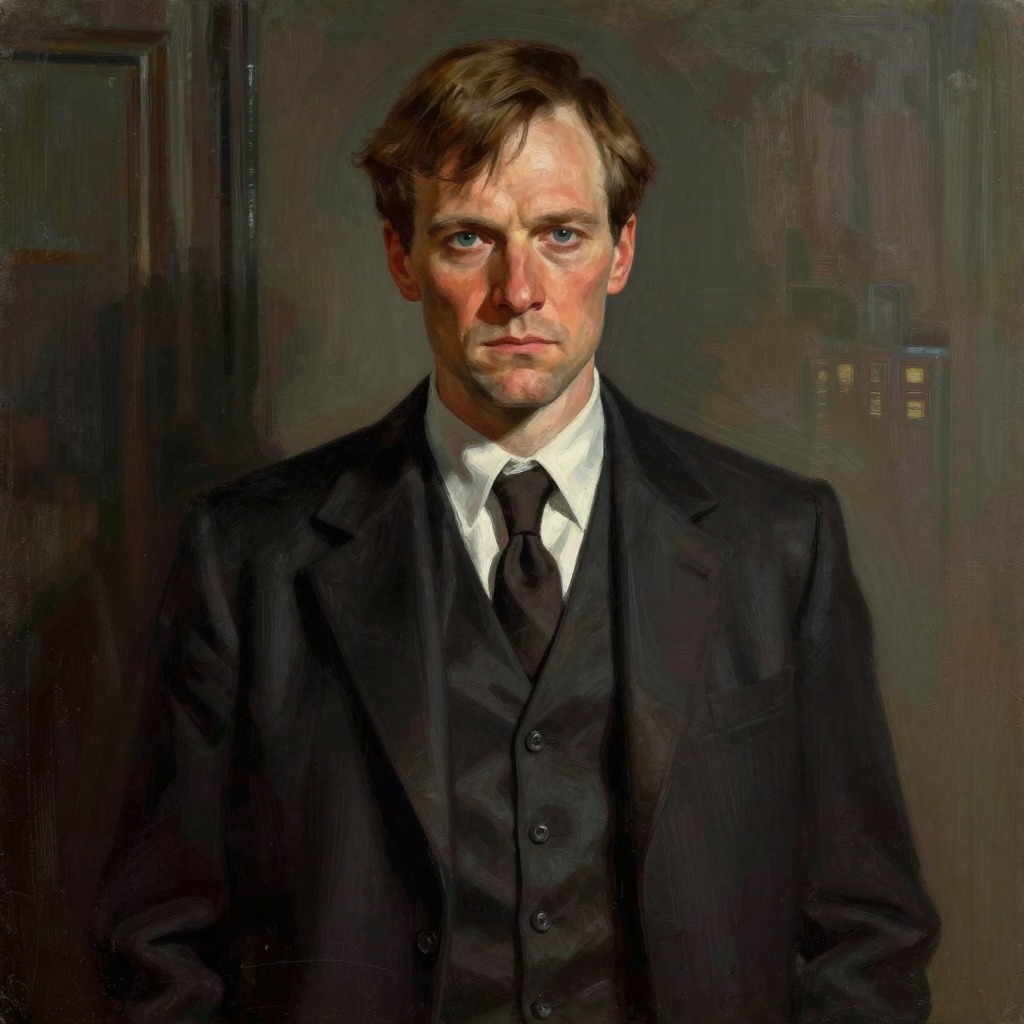
The interrogation takes place in the windowless upper chamber of the Ministry of Love, the meeting place O’Brien had promised from the first and now reminds Winston he predicted: ‘I told you,’ he says, ‘that if we met again it would be here.’ He has already introduced Winston to the instrument he will use – a dial whose numbers run up to a hundred, with a lever that can inflict pain ‘at any moment and to whatever degree I choose’. Before the fingers appear, O’Brien fixes the metaphysical stakes of the session. He makes Winston repeat the Party slogan, ‘Who controls the past controls the future: who controls the present controls the past’, and draws out the conclusion that since the Party controls all records and all memories, it controls the past itself. Reality, he insists, ‘exists in the human mind, and nowhere else’, and is to be found ‘only in the mind of the Party, which is collective and immortal’. He diagnoses Winston as ‘mentally deranged’ for trusting a memory the Party denies, and summons the diary against him, quoting its central axiom, written months earlier in the room above Mr Charrington’s shop: ‘Freedom is the freedom to say that two plus two make four.’ The act of keeping that diary had itself been a capital matter – nothing in Oceania was illegal, since no laws remained, but the diary, if detected, meant death, or at least twenty-five years in a forced-labour camp. The finger test is engineered to take the diary’s axiom, which Winston had set down as the ground from which all else follows, and convert it into the instrument of his undoing.
The four fingers
The procedure is stark and repetitive. O’Brien holds up his left hand and asks, ‘How many fingers am I holding up, Winston?’ Winston answers, ‘Four.’ O’Brien then asks, ‘And if the Party says that it is not four but five – then how many?’ Winston answers ‘Four’ again, and the word ends in a gasp of pain: the needle of the dial has shot up to fifty-five, the sweat springs out all over his body, the air tears into his lungs and issues again in deep groans that even clenched teeth cannot stop. O’Brien watches, the four fingers still extended, and draws back the lever; this time the pain is only slightly eased. The question returns, the needle settles at sixty and then rises again, until the fingers stand up before Winston’s eyes ‘like pillars, enormous, blurry and seeming to vibrate, but unmistakably four’. He shouts ‘Four! Four! What else can I say? Four!’, and then, under the next surge, ‘Five! Five! Five!’ – a cry that earns only O’Brien’s correction: ‘No, Winston, that is no use. You are lying. You still think there are four.’
At this moment the scene reveals its true purpose. The object of the torture is not to extract an utterance but to produce a belief, and Winston’s merely verbal ‘five’ fails the test because it remains indexed to the four he actually sees. The questions continue; he begs, ‘Four! Stop it, stop it! How can you go on? Four! Four!’, and after the fifth question produces a cry of pure confusion – ‘Four! Five! Four! Anything you like. Only stop it, stop the pain!’ – then collapses, and is abruptly sitting up with O’Brien’s arm round his shoulders, clinging to him ‘like a baby’, curiously comforted by the heavy arm, his teeth chattering and the tears rolling down his cheeks. ‘You are a slow learner, Winston,’ says O’Brien gently. ‘How can I help it?’ Winston blubbers. ‘How can I help seeing what is in front of my eyes? Two and two are four.’ O’Brien’s answer lays out the new arithmetic that will govern everything that follows: ‘Sometimes, Winston. Sometimes they are five. Sometimes they are three. Sometimes they are all of them at once. You must try harder. It is not easy to become sane.’
Escalation to the visible threshold
O’Brien motions to the man in the white coat, who examines Winston and nods, and the pain flows again: the needle at seventy, seventy-five, eighty, ninety. Winston keeps his eyes shut this time, knowing that the fingers are still there and still four, and that all that matters is to stay alive until the spasm is over. Asked whether he wishes to persuade O’Brien that he sees five, or really to see them, he answers with the demand of a convert in the making: ‘Really to see them.’ In the next round a forest of fingers seems to dance behind his screwed-up eyelids, weaving in and out, disappearing and reappearing; he is trying to count them and cannot remember why, only that the count is impossible, and that this is ‘somehow due to the mysterious identity between five and four’. Finally he produces the answer O’Brien has been waiting for: ‘I don’t know. I don’t know. You will kill me if you do that again. Four, five, six – in all honesty I don’t know.’ ‘Better,’ says O’Brien. A needle slides into Winston’s arm, and a blissful, healing warmth spreads all through his body; he looks up gratefully at the heavy, lined face, so ugly and so intelligent, and feels that he has never loved O’Brien so deeply, and that what he wanted was not so much to be loved as to be understood.
Consequences
The finger torture is the ‘learning’ phase of the three-stage re-integration that O’Brien will later define as learning, understanding and acceptance. It is also the model for everything that follows inside the Ministry of Love: the production of the photograph of Jones, Aaronson and Rutherford, which O’Brien holds before Winston and then consigns to the memory hole while denying that it ever existed; the instruction that Winston invented the memory; the later, drugged assertion that Winston once saw five fingers and now remembers the very moment of inventing the false memory. The collapse of arithmetic certainty begun here reaches its public and permanent form in the final chapter, when Winston, at his corner table in the Chestnut Tree Café, absently traces ‘2 + 2 = 5’ in the dust. The man who had opened the diary in the belief that sanity is not statistical, and that the past is unalterable, has been brought to the point of being unable to say how many fingers he sees.
Significance
As a scene, the finger torture is the allegorical heart of the novel. It externalises the Newspeak project – the destruction of the words and concepts by which heretical thought might be conceived – as a physical event performed on a single human body. Four fingers are the last irreducible fact, the minimum claim of the senses, and O’Brien’s power to make Winston call them five demonstrates the Party’s power over the mind that its ideology demands. The scene is also the logical terminus of the system in which a Party member lives from birth to death under the eye of the Thought Police, in which there is no law, and in which the endless purges are not punishments for crimes committed but the wiping-out of persons who might perhaps commit a crime at some time in the future; the dial is that system’s most intimate instrument. It completes the tragic symmetry of Winston’s arc: the man who began the diary by claiming freedom grounded in arithmetic ends unable to count, and the man who once hoped that O’Brien was on his side discovers that the protector and the tormentor are one and the same, and loves him for it. Whether the screamed ‘Five! Five! Five!’ is genuine surrender or a last desperate ruse, O’Brien himself has already answered – he dismisses it as a lie – but what is not in doubt is the outcome. The Party, O’Brien will later explain, is ‘not content with negative obedience, nor even with the most abject submission’; it demands the free-will capitulation of the inner mind, and it is here, rather than in Room 101, that Winston’s inner mind is first captured.